When you buy through links on our site , we may earn an affiliate commission . Here ’s how it works .
COVID-19 vaccines and treatments typically get tested in monkeys before being given to humans , but now , those primates are in short supply , The Atlantic reported .
Prior to thepandemic , the U.S. was already approach a potentialmonkeyshortage , according to a2018 reportfrom the National Institutes of Health ( NIH ) . The author of the report proposed establishing a " strategic monkey reticence " to meet future demand , and to provide a polisher in case of " irregular disease outbreaks , " accord to The Atlantic . No reserve was ever ground , and whenCOVID-19emerged in late 2019 , the demand for monkeys skyrocket worldwide .
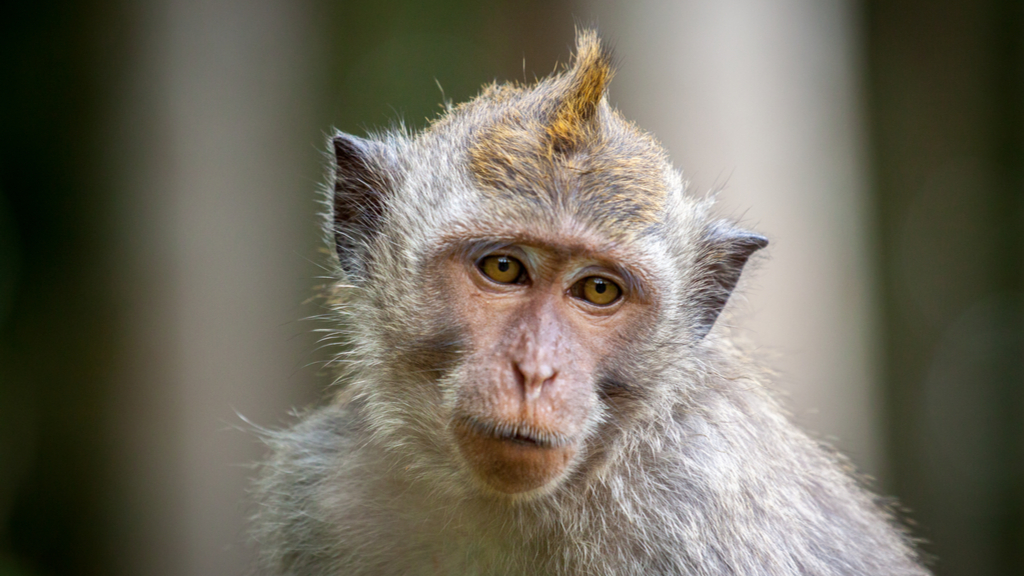
Cynomolgus macaque monkey
Compounding the problem , the U.S. received about 3 out of 5 research monkeys fromChinalast yr , and now , that critical supplying chain has been lop , The Atlantic reported . In January and February , China identify hard-and-fast prohibition on the transport and sales event of wildlife and demand that domesticated researchers complete a government blessing process for access to imp , consort toThe Globe and Mail . There is no tantamount approval cognitive operation for foreign researchers , such as those based in the U.S. , so China ’s export of inquiry rapscallion has effectively been frozen .
Related:20 of the worst epidemic and pandemic in history
The NIH fund seven archpriest centers nationwide , and the agency now order who can get at its rapscallion through an go-ahead calledAccelerating COVID-19 Therapeutic Interventions and Vaccines(ACTIV ) .

When scientists ask to prove COVID-19 treatments on rapscallion at the California National Primate Research Center , which is funded by the NIH , " I have to tell them , ' I ’m dreary , we are not allowed to start your research , ' " Van Rompay told The Atlantic . The job extends far beyond COVID-19 research , affecting all those who require to try out treatments on scalawag but do n’t meditate thecoronavirus .
Primate studies are important because researchers can essay a treatment orvaccine ’s refuge and effectiveness without posing any risk to humans . For example , because imp and mankind have similarimmune systems , an effective coronavirus vaccine should theoretically trigger comparable effects in both , The Atlantic reported .
touch on : Here are the most promising coronavirus vaccine candidates out there

— 11 ( sometimes ) deadly diseases that hopped across species
— 14 Coronavirus myth wear out by scientific discipline
— The 12 mortal viruses on solid ground

With rapscallion , researcher can also learn geezerhood group , such as infants , that may not initially be included in human vaccinum tryout , Sallie Permar , a vaccine scientist at Duke University , told The Atlantic .
To husband the nation ’s supply of imp , labs are sharing high priest across multiple studies , Jeffrey Roberts , the associate director of primate religious service at the California National Primate Research Center , told The Atlantic . They use the apportion scamp as a control group — a equivalence group that does not get the data-based discourse or vaccine being tested .
Related : treatment for COVID-19 : drug being tested against the coronavirus

However , these measures can stretch the monkey supply only so far . " There needs to be a real national investment to build the substructure , not only for this pandemic , but also for the future with the next pandemic , " Jay Rappaport , the music director of the Tulane National Primate Center , told The Atlantic . But breeding a robust supply of monkeys in the U.S. could take long time and meanwhile , the current pandemic fad on .
To learn more about the scamp shortage , read the entire The Atlantic piecehere .
in the first place published on Live Science .


