A unexampled specie of giant inscrutable - sea isopod has been identified in the Bahamas after investigator with OceanX deployed trap on the seabed . A first cousin of the much beloved terrestrial roly - polypill hemipteran , they serve a similar ecological use in the nutrient bike , making them a life-sustaining part of the ecosystem .
These alien - alike critters have see - through bodies and big buggy eye that help them search for prey in the dingy depths . If you ’re wondering what a roly - poly on steroids eats 600 m ( 1,969 feet ) below the ocean , they ’re partial to ocean cucumbers , sponges , and nematodes , but will also scavenge any morsels that rain down down from above .
The young species was discovered during a 2019 mission led byOceanXand the Cape Eleuthera Institute that deployed rally eel cakehole and light traps in the Exuma Sound at profoundness between 540 and 656 beat ( 1,172 and 2,152 feet ) . At sizes between 4 and 6 centimeters ( 1.5 and 2.4 inches ) , they ’re described as declamatory compare to other species in their genera , most of which are less than 3 cm ( 1.2 inches ) .
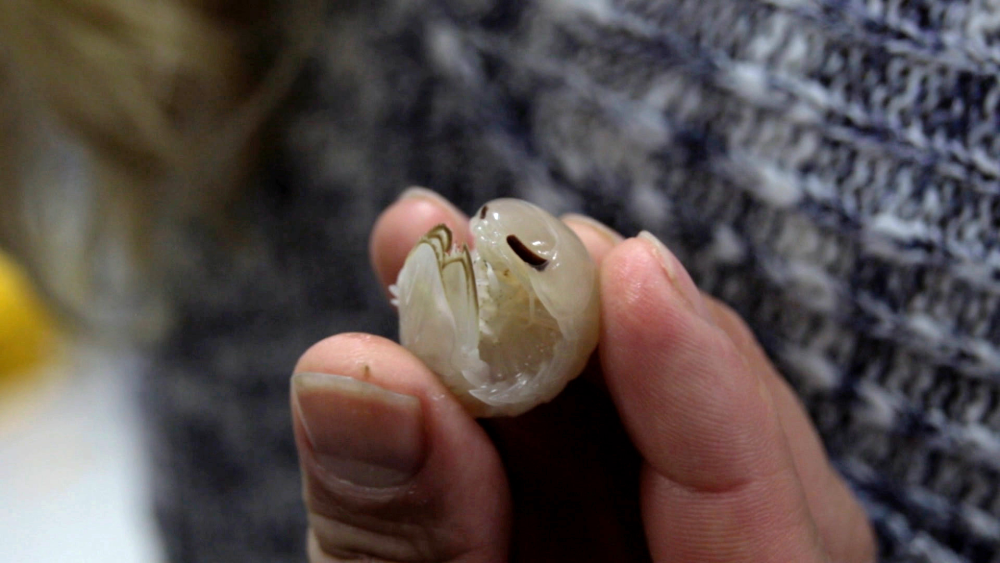
It’s dangerous to go alone! Take this.Images courtesy of OceanX
The chonky boi has been namedBooralana nickorum , named after two family members of report elderly author Edward Brooks . It joins two other species from the nautical Cirolanidae to be discovered in the Caribbean region since 2010 : Bathynomus maxeyorumandBathynomus yucatanensis .
Its segmented body is protected by a hardened exoskeleton which is white at a push , but approach translucent . There ’s no demand for flashy coloration when you dwell in a habitat that ’s almost completelydevoid of light .
you’re able to see its gumption and things , " study co - author Nicholas Higgs toldLive Science . consort to Higgs , who is director of inquiry and innovation at the Cape Eleuthera Institute , it was vindicated to the team that the young species was “ definitely unlike from anything we ’ve see before " when they first observed it onboard the enquiry watercraft .
The isopod ’s discovery comes as part of an OceanX delegation that was focus on identifying both deep - ocean and mid - water species , test three-D model of little - known organisms , investigating the enlargement and give state of sargassum falls ( seaweed on the sea storey ) , and satellite tagging bluntnose six - branchia shark at deepness .
And if you get a unexampled - to - science specie of gargantuan see - through isopod to flush ? As they say , there are many benefits to being a marine biologist .
The field of study is published inZootaxa .
