Though tens of thousands of people were crucified, just four skeletons have been found with physical evidence of crucifixion.
Adam Williams , good manners of Albion ArchaeologyThe skeleton has a nail in its heel , the best strong-arm grounds of Roman excruciation regain to date .
At first , the skeleton did n’t await like much . Almost 2,000 long time old and caked with clay , it strike archeologist as just one of many stiff line up in a cluster of Roman memorial park . But closer examination divulge an Fe nail in its right hound — indisputable grounds of crucifixion .
“ It ’s essentially the first time that we ’ve found physical evidence for this pattern of crucifixion during an archaeological excavation,”said excavation leader David Inghamof Albion Archeology .
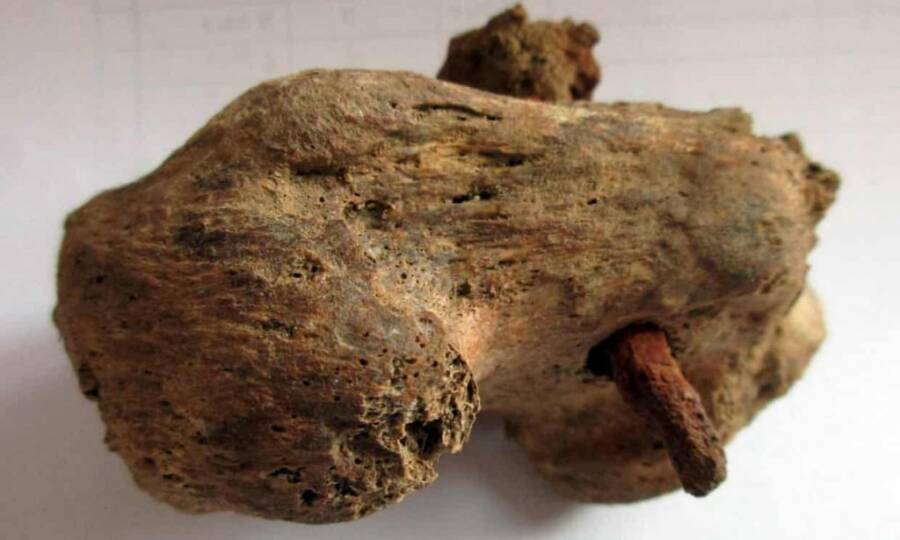
Adam Williams, courtesy of Albion ArchaeologyThe skeleton has a nail in its heel, the best physical evidence of Roman crucifixion found to date.
“ You just do n’t regain this . We have written evidence , but we almost never ascertain strong-arm evidence . ”
archaeologist first came across the corpse in 2017 . While turn up land in cooking for a Cambridgeshire lodging growth , they found five cemeteries date back to the 3rd or fourth 100 .
There , they dutifully excavated the skeletal frame and tape the breakthrough . But no one mark the nail imbed in its heel until the bones were cleaned at a nearby science laboratory . Then , archeologists realized that they ’d regain rare , physical evidence of a Roman - era excruciation .
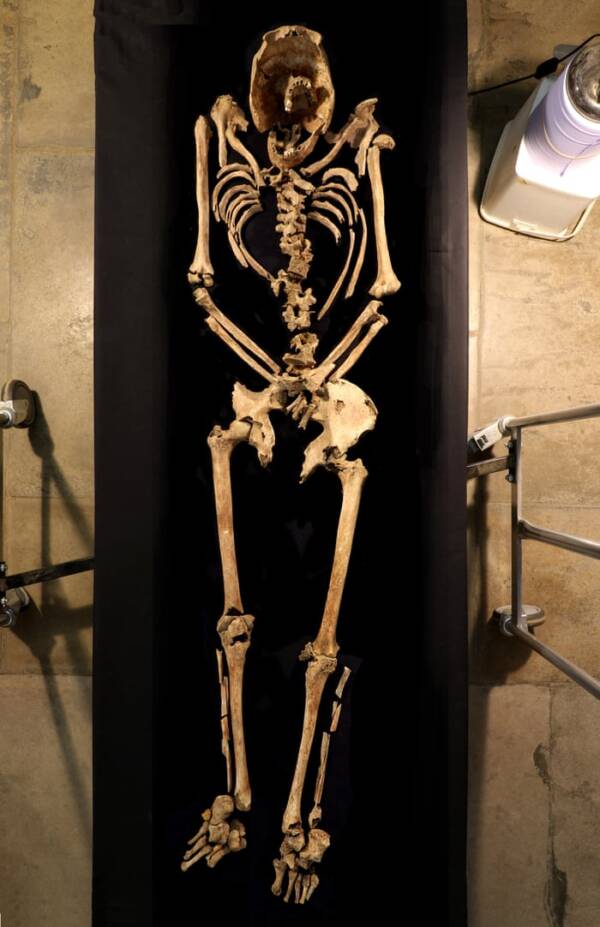
Adam Williams, courtesy of Albion ArchaeologyArcheologists didn’t realize the significance of this skeleton until they’d cleaned its bones.
“ We know a sane amount about excruciation ; how it was practiced and where it was do and when and so on from historic accounts,”said Ingham . “ But it ’s the first touchable grounds to actually see how it worked . ”
The nail in the skeleton ’s heel , archeologists theorized , was to “ stop him wriggling . ”
Adam Williams , courtesy of Albion ArchaeologyArcheologists did n’t agnise the significance of this skeleton until they ’d clean its bones .
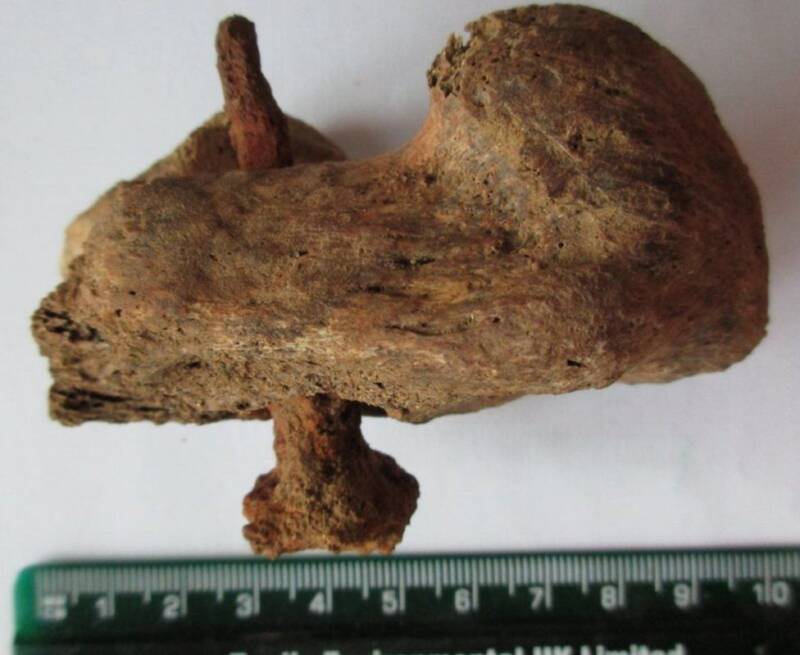
Albion ArcheologyAnother angle of the nail, which appears to have gotten stuck in the bone.
According to archaeologist , the skeleton belonged to a human who was between 25 and 35 age sometime when he die around 1,661 and 1,891 years ago . Injuries on his soundbox , and excitation on his legs , suggest that he was either a slave or a prisoner who spend meter in shackle .
His death by crucifixion , explained Corinne Duhig , a University of Cambridge archaeologist and bone specialiser , show “ that the inhabitant of even this small settlement at the sharpness of empire could not avert Rome ’s most barbaric punishment . ”
She mused that the man may have been a striver who “ commit some crime or infringement ” or an ordinary citizen who “ committed a grave crime . ” Maybe , she enunciate , he “ get on the awry side of the boss or middlemen and was give a terrible penalisation to admonish others to behave . ”
His death belike ingest between four to six day and waslikely observed by Roman guards . Researchers estimate that between 100,000 to 150,000 people exit by excruciation before the practice was banned in 337 advertizing — but physical evidence of crucifixion is rare .
That ’s because most people were append to crosses with rope , not nail . And if someone was nail to a hybridizing , then papistic authorities often retrieved the nail after they ’d give-up the ghost . In this casing , it appears the nail bent and got stick in the bone .
What ’s more , excruciation victims were rarely afforded a burial . Roman say-so preserved this brutal penalisation for enslaved people , lower classes , or perceived enemies of the state . But this skeleton was found in a cemetery with his blazonry across his chest .
This , and the nail stuck in his hound , helped maintain evidence of his grim final moment .
Albion ArcheologyAnother angle of the nail , which appear to have gotten stuck in the os .
To date , the skeleton found in Cambridgeshire is just one of four found with strong-arm evidence of crucifixion . archeologist find alike skeletons in Gavello , Italy , Mendes , Egypt , and Jerusalem , Israel . But only the skeleton found in Israel had an real nail in it .
That skeleton , like the one found in Cambridgeshire , had a nail impaled in its heel osseous tissue . But since the body was not intact , some do n’t see it as substantial physical grounds that a crucifixion acquire seat .
As such , the skeleton found in Cambridgeshire offer a rarified , grisly look at great punishment in the Roman Empire . To divvy up this unparalleled breakthrough , researchers hope to make a 3D replication of the bone to expose at the Museum of Archaeology and Anthropology in Cambridge .
After reading about the crucified Roman - geological era skeleton find in England , learn about the discovery of askeleton found in shacklesfrom Roman - epoch Britain . Or , identify how scientist find thenails they believe were used to mortify Jesus Christ .
