When you buy through links on our web site , we may realise an affiliate direction . Here ’s how it work .
crookback whale population across the domain may in reality be separate race , a new transmissible survey reveals .
Though the expert bather makethe foresightful migrationsof any mammalian , the subpopulation in the North Pacific , North Atlantic and the Southern Hemisphere ocean stick to disjoined routes .
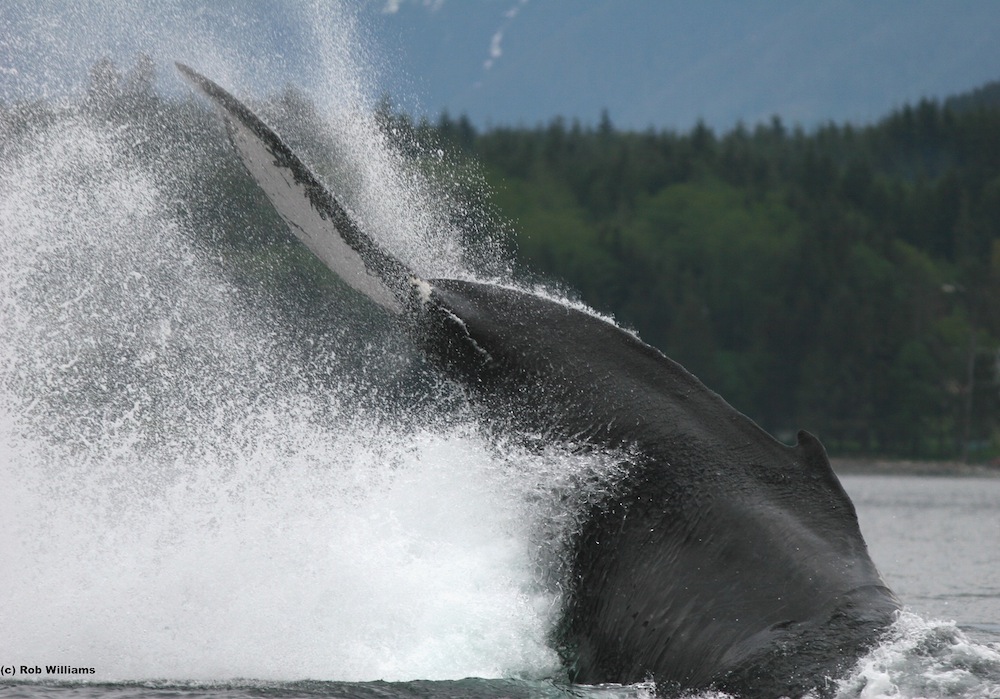
The tail of a humpback whale as it descends into the water.
" Humpback whale populations are in reality more isolated from one another than we mean . Their populations appear separated by warm equatorial waters that they rarely cross , " report co - writer Jennifer Jackson , a research worker with the British Antarctic Survey , said in a statement .
This isolation may explain why the northerly swimmers tend to have darker coloring on their underbellies and derriere than their southern counterparts . The results hint the dissimilar populations are develop severally . [ In Photos : dog Humpback Whales ]
As a result , the population in the three oceans should be sort as distinct subspecies , the researchers found .

Long - length natator
crookback heavyweight ( Megaptera novaeangliae ) usually eat at in high spirits latitudes , then make their way of life toward the equator to breed — a journey that can cover 3,000 mile ( 5,000 klick ) . The whales also seem to travel in strikingly straight lines , rarely veering off course of instruction by more than 1 degree , though precisely how they accomplish thisamazing navigationremains a mystery .
To sympathize how the unlike populations were linked , Jackson and colleagues used bantam darts to collect DNA from more than 2,600 whales in five different ocean regions . The team then analyse the whale ' mitochondrial DNA , which is carried in the egg and passed on through the maternal line , as well as DNA found in the core of the cell , which is inherit from both parent .

Because mitochondrial DNA change more promptly , it provided a snapshot of how the differenthumpback giant populationsmigrated and intermingled over the last million twelvemonth , whereas the more tardily mutating nuclear DNA revealed long - term trends for the species .
disjunct populations
The DNA psychoanalysis uncover these populations have kept to themselves for quite a retentive sentence .

" Although distaff whales have interbreed from one cerebral hemisphere to another at sure times in the last few thousand years , they generally stay in their sea of birth . This isolation means they have been evolving semi - independently for a long meter , " Jackson enounce in a statement .
The new determination could mean some Megaptera novaeangliae population are more slight than scientist had thought . scientist ca n’t simulate dwindling population in one ocean will be replenished with emigrants from remote oceans .
The study was print today ( May 20 ) in the journal Proceedings of the Royal Society B.


