When you buy through link on our site , we may pull in an affiliate perpetration . Here ’s how it works .
DENVER — The mosasaur , a fearsome marine reptile that stalk the Cretaceous seas , clean its own kin , a new fossil discovery reveals .
A fossilized mosasaur found in Angola contains the fond remains of three other mosasaurs in its stomach , research worker reported here Tuesday ( Oct. 29 ) at the yearly meeting of the Geological Society of America .

The fossilized skeleton of a mosasaur with the bones of three other species of mosasaur in its gut. The marine monster likely scavenged upon carcasses brought to the west coast of Africa by trade winds.
" These are three different species of mosasaur inside the belly of a 4th mintage of mosasaur , " said subject area researcher Louis Jacobs , a vertebrate palaeontologist at Southern Methodist University in Texas . [ T - Rex of the Seas : A Mosasaur Gallery ]
The find is n’t the first example of mosasaurs digesting mosasaurs , but it illuminates an ancient ecosystem surprisingly similar to 1 watch in parts of the sea today .
A thin , mean , eat up machine

Bentiaba badlands in southern Angola. This area is a rich site for fossils that were laid down when the land was slightly offshore during the Cretaceous period.
Mosasaurs were at the top of the marine intellectual nourishment chain from about 98 million years ago to the ending of the Cretaceous 66 million years ago , when they went extinct . As is the case for modern whales , thefirst mosasaur ancestorswere land - dwellers . They looked not unlike today ’s monitor lounge lizard , said survey researcher Michael Polcyn , also a vertebrate paleontologist at Southern Methodist University .
" By the meter they ’re in the piss mayhap 10 million years , they ’ve fully adapted to the marine environment — so a downturned tush with a dorsal flue and pentad — and they were really making their sustenance like atoothed whale , " Polcyn tell LiveScience .
In other words , mosasaurs were as fearsome predators as today ’s orcas , but with reptilian , fishlike bodies that could grow to more than 30 feet ( 9 meters ) in length .

Stunning sea cliffs on the coast of Angola were fossil beds reveal a rich Cretaceous ecosystem
A rich ecosystem
The mosasaur with a belly full of other mosasaurs was found at a site called Bentiaba in southerly Angola . The fossil are engraft in sandstone cliffs and badlands along the Atlantic glide . During the Cretaceous , this area was just offshore from Africa .
" The incredible profusion of the web site continues to astonish us , " Polcyn said . " Each year we regress , there is another meaning find . "
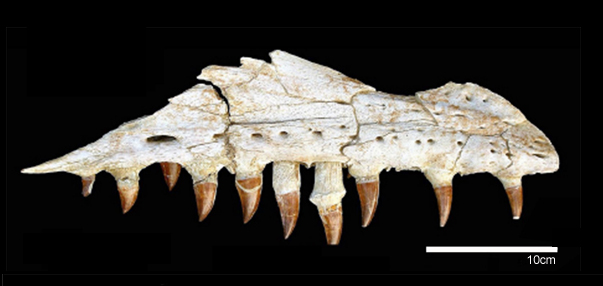
What big teeth you have! The jaw of the mosasaurPrognathodon kianda.
The researchers first discovered thehungry , hungry mosasaur , a metal money prognosticate ( Prognathodon kianda ) , in 2006 , but were n’t able to dig up it until 2010 . That ’s when they realise the fossil record also recorded the mosasaur ’s last meal .
The mosasaurs inside the paunch are clearly digest , with their tooth tooth enamel eat away by stomach acid . One is small and eaten whole , but the other two are incomplete , mostly represented by skull and vertebrae — " not the most nutritious and tasty stuff that you would wipe out , " Jacobs articulate . The evidence points to the large mosasaur as a scavenger , nosh on the corps of numb mosasaurs brought to the surface area by the currents .
The mosasaurs are only part of the chronicle . Paleontologists dig at the site have already expose seven mosasaur specie , two plesiosaur , nine shark and rays , four form of turtles and many fish . Virtually all the bone show evidence of scavenging by shark .

The ecosystem likely owe its cornucopia to the trade winds , prevailing lead that blow between 15 degrees and 30 degrees North and South parallel of latitude . At the time , this stretch of coast fell squarely under the influence of these wind , Polcyn said . The winds drive sea stream that cause upwelling , the circulation of nutrient - rich bottom waters up to the ocean ’s airfoil . Suchupwelling zoneshave robust intellectual nourishment range , starting from plankton and end with magnanimous predator . The flow also would have bear on floating carcasses toward shore , Polcyn state .
Rich upwelling zone are mutual in the oceans today , include a spot off of Monterey , Calif. , known for its sea otters and other fauna ; a stretch of sea off the Atacama Desert in western South America ; and the Benguela Current Large Marine Ecosystem off the slide of Namibia .
The Benguela ecosystem is fire by the same atmospherical processes that drive the mid - Cretaceous hotspot of life , Polcyn said . The continent of Africahas moved and rotated just slightlyover the intervening gazillion of year , shifting the relative location of the upwelling .

The mosasaur specimen with a full belly is still being prepared by fossil technician . Researchers have also uncovered other ancient beasts with creatures in their gut at the site , Polcyn said , and they design to analyze those finds further .