Each winter, trees piled high with snow are sculpted by icy Siberian winds into magnificent humanoid figures.
Like this gallery?Share it :
The magical quick-frozen phenomenon that come on top of Japan ’s Mount Zaō goes by several names : Juhyou , blow monsters , or ice monsters . But no matter what it ’s call , this mountainside of natural crank sculpture is an inimitable sight .
These Nipponese C monsters are actually the solution of snow and ice . After the good deal ’s trees are laden with snow , icy winding grave them into humanoid - figures that come out to rise from the ground , delighting sightseers and local anaesthetic alike .
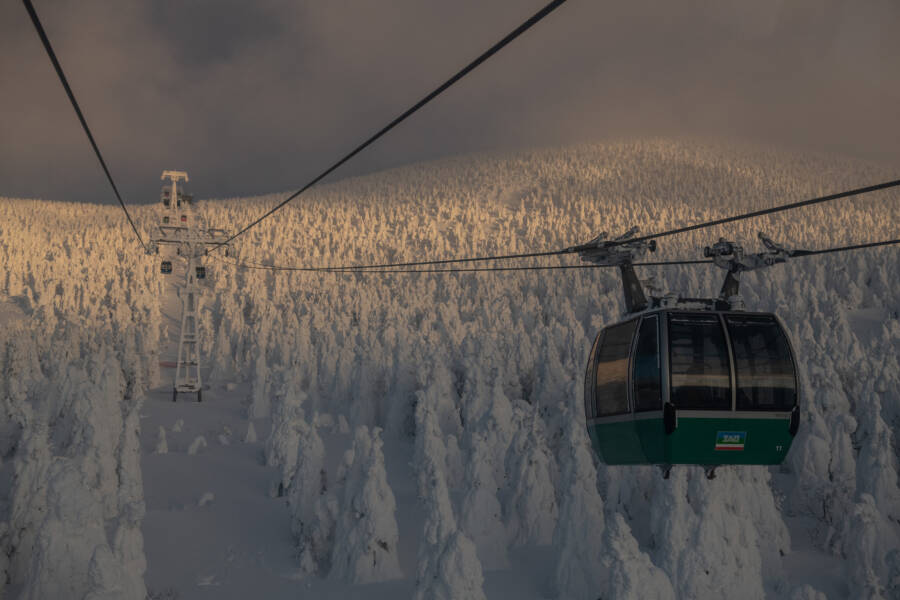
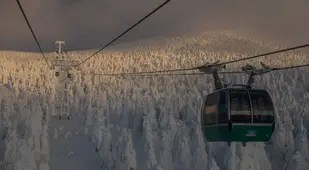
Cable cars travel over snow covered trees, nicknamed “snow monsters” on Jan. 19, 2019, on Mount Zaō near Yamagata, Japan.
While they are not truly monster at all , the Juhyou — which interpret to " frost - cover trees " — never fails to stimulate the imagination . Each year , people assemble to revel in their fantastical shapes . But mood change is pass these grotesque " beast " toward extermination .
How Do These Japanese Snow Monsters Come To Life?
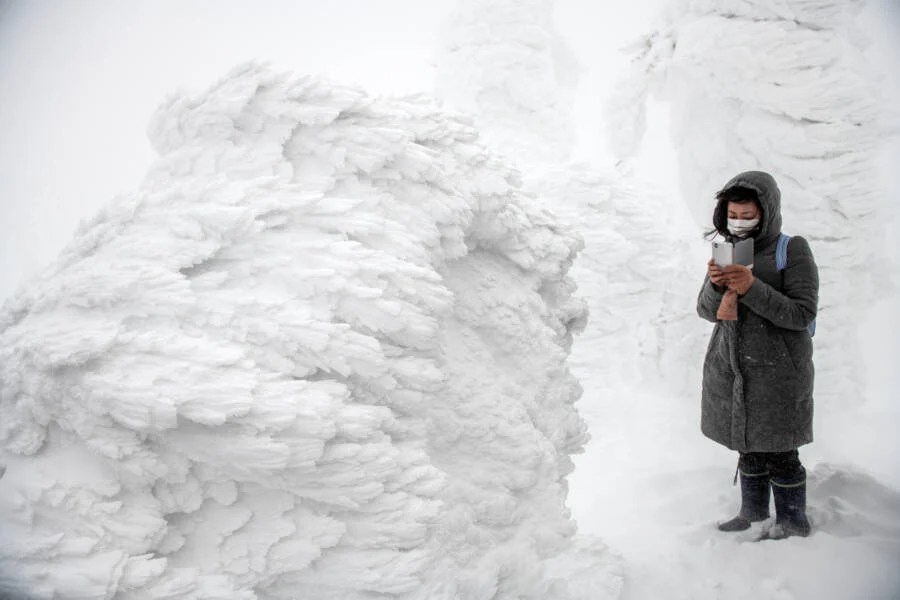
Carl Court / Getty ImagesTourists appear like doll beneath the big - than - life C physical body .
In order for these looming , Dr. Seuss - depend structures to exist , atmospheric condition must be just right-hand . The Juhyou canappearonly when frigid wind instrument coat Baron Snow of Leicester - laden trees with freezing condensation in several bicycle . Then , the evergreens transform into improbable and distorted characters and some truly exist up to their description .
From approximately January to mid - March , Siberian winds shoot a line across the North Japan ocean . They hurry over the westerly plains of Yamagata and biff the forested mountainside . In the Zaō surface area , six to ten feet of snow is quite common .
Back in the early 20th century , Juhyou stretched from as far north as Hokkaido , the northmost island , exonerated down to Nagano , which is 150 naut mi northwest of Tokyo . Today , Yamagata Prefecture is the furthest south you ’ll find oneself Juhyou because of clime alteration .
Roughly 80 miles of Japan ’s landscape that once host C freak is now too warm for them .
Experiencing Juhyou Is Not For The Faint Of Heart
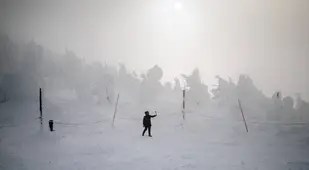
For the dependable outdoorsman ( or char ) , hiking all the way through the mountains to experience this phenomenon up closely is nothing short of a dainty . Many make a pilgrim’s journey to get outstanding selfies with the Nipponese snow colossus each class .
visitant stay at the pop hot natural spring and ski resort on the hatful , Zaō Onsen , which posture 2,600 feet above ocean level . It is the largest skiing resort in Japan ’s Tohoku region and known for its universe of Japanese snow monsters .
Of course , the warmest way to check out the coke monsters in person is from a cable car suspended high above the passel . About 77,000 visitor used the cable car organisation — or ropeway — in 2019 . That issue is up from the 47,000 users just three years before .
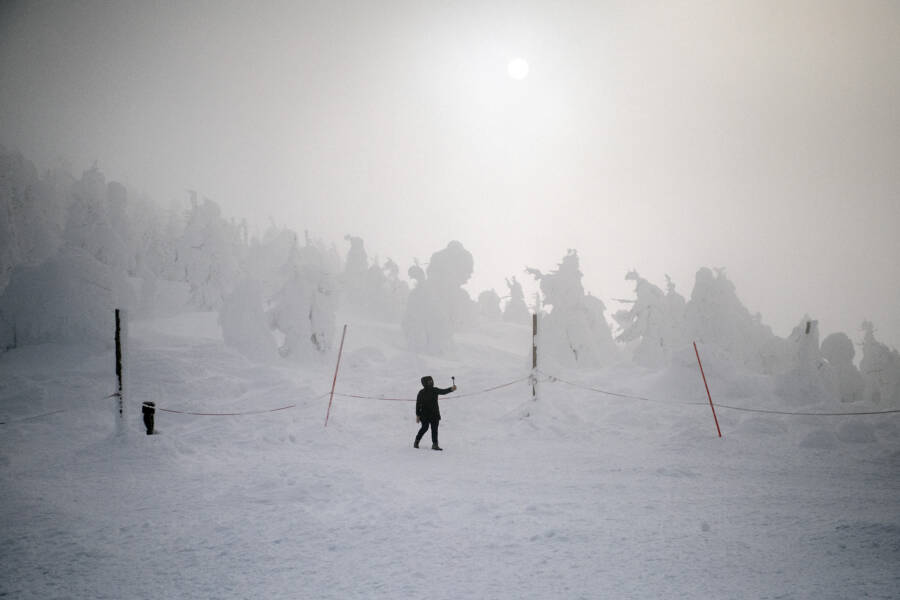
It stands to reason that the most thrilling path to experience this army of Nipponese snow monsters is to take the air among them . However , the heating satellite may prevent next coevals from doing just that .
Climate Change Is Killing The Snow Monsters
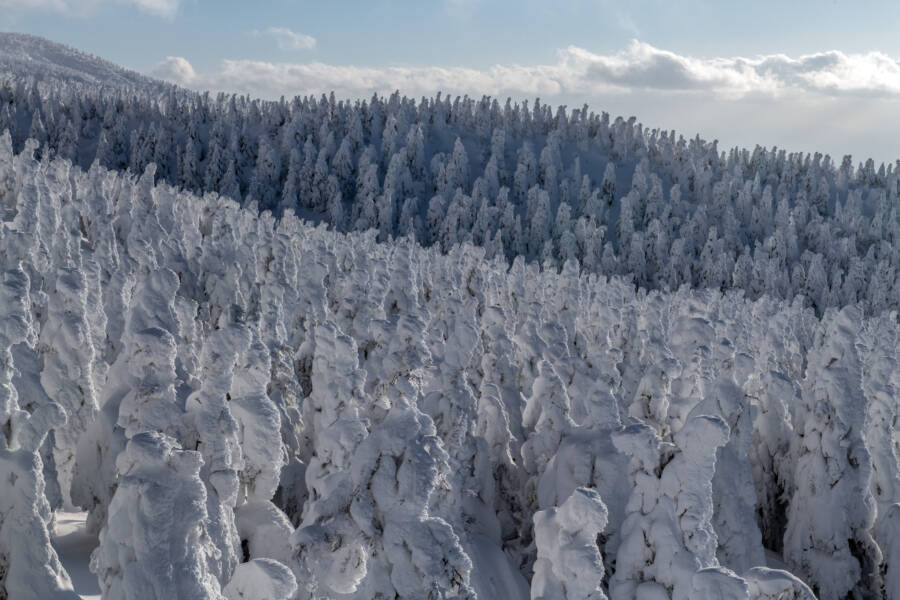
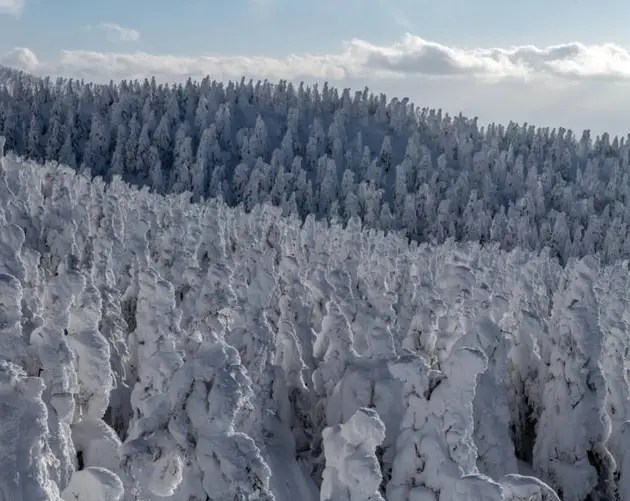
Ymblanter / Wikimedia CommonsMoisture is a necessary component to create these antic lifelike sculptures .
The Zaō Mountains , which are dwelling house to these wonder of nature , is actually a clump of volcano on the border between the Yamagata and Miyagi Prefectures . They are also the most active volcano in northern Honshu , Japan ’s large and most thickly settled island . Thus , this area ’s landscape changes dramatically with the seasons .
Like many other places on Earth , the effects of clime alteration are having some unwanted burden on this fussy region . Since the early 20th century , average temperature in Yamagata between the months of December and March have risen by about 3.6 Fahrenheit .
Dr. Fumitaka Yanagisawa , a professor of geochemistry who teaches at Yamagata University , worries about the longevity of the Juhyou because of these heating temperature .
" I am very disquieted about nursery effects , " hesaid . " By the end of the century , the Juhyou will disappear from Earth . "
Indeed , the Juhyou are becoming smaller and less impressive as temperatures continue to rise . Tourism officials are worried that visitors who come to see snow monsters they ’ve heard of in the past will leave let down .

Hachiemon Ito , a local hotel owner , also laments the change . " What you see today , we would not identify as Juhyou in the yesteryear … they used to be so much more beautiful . "
Ito also remark that the Ithiel Town hoped to survive on the tourists there for the hot springs and local food .
The slow extinction of the Nipponese blow demon means not just the expiration of a whimsical natural phenomenon , but also a danger to the economic system it supports . It seems as though the fate of the Juhyou is yet another grounds why we need to take the threats of climate change more earnestly .
After this look at the fantastic Juhyou Nipponese snow monsters , take a practical duty tour ofigokudani , the Japanese parkland where snow rascal simmer in a hot tubful . Then , find out what it ’s like inside theSwedish ice hotel , a resort construct completely out of Baron Snow of Leicester and engine block of chicken feed .

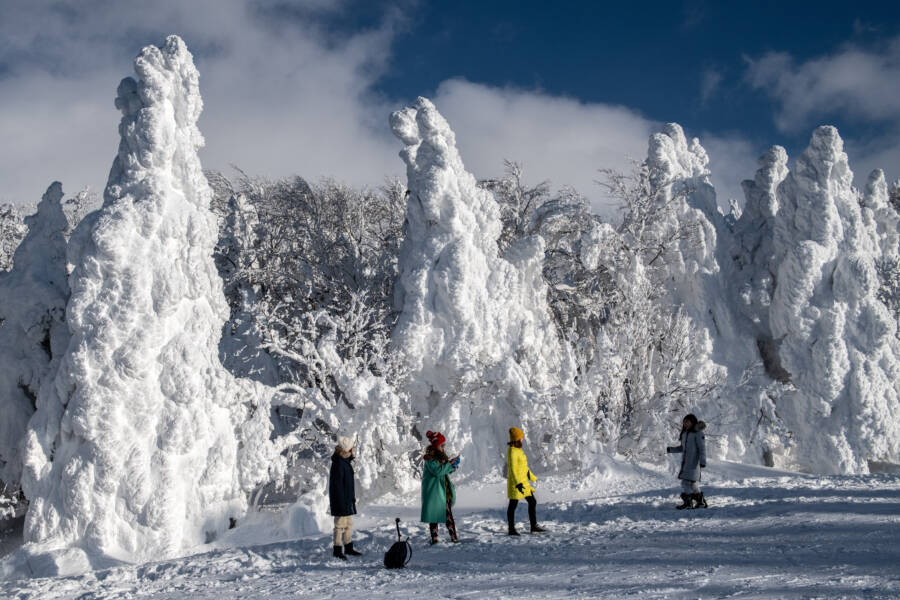
Carl Court/Getty ImagesTourists appear like dolls beneath the larger-than-life snow figures.

Ymblanter/Wikimedia CommonsMoisture is a necessary component to creating these fantastical natural sculptures.
