The Solar Dynamics Observatory ( SDO ) has been staring at the Sun for over a 10 , collecting valued data about our legion whizz and keeping an heart on its violent flareups . NASA ’s close watch of the Sun is on hold for now after a busted weewee pipage flood the observatory ’s data collection snapper , damage the electric equipment that processes information about the star .
A cooling water strain burst at the Joint Science Operations Center ( JSOC ) , the science data processing facility at Stanford which houses the servers that salt away data from the Helioseismic and Magnetic Imager ( HMI ) and the Atmospheric Imaging Array ( AIA ) instruments for NASA ’s SDO , as well as the Sun observing satellite , Interface Region Imaging Spectrograph ( IRIS ) , the place agencyannouncedlast week . “ Several in of water were in the JSOC room , ” a statement on SDO ’s web site read . “ As of this dawn it appears the implosion therapy has been drained but things are still wet and at least one leak onto electronic equipment proceed .
The adeptness is currently offline while JSOC works on fixing it , the mall tot in anupdate . “ At this point , it is unclear how long it will take to assess the impairment , repair the equipment , and perfect recovery , ” JSOC added . “ We do know that the damage is extensive and [ repairs ] will not be dispatch until 2025 . ”
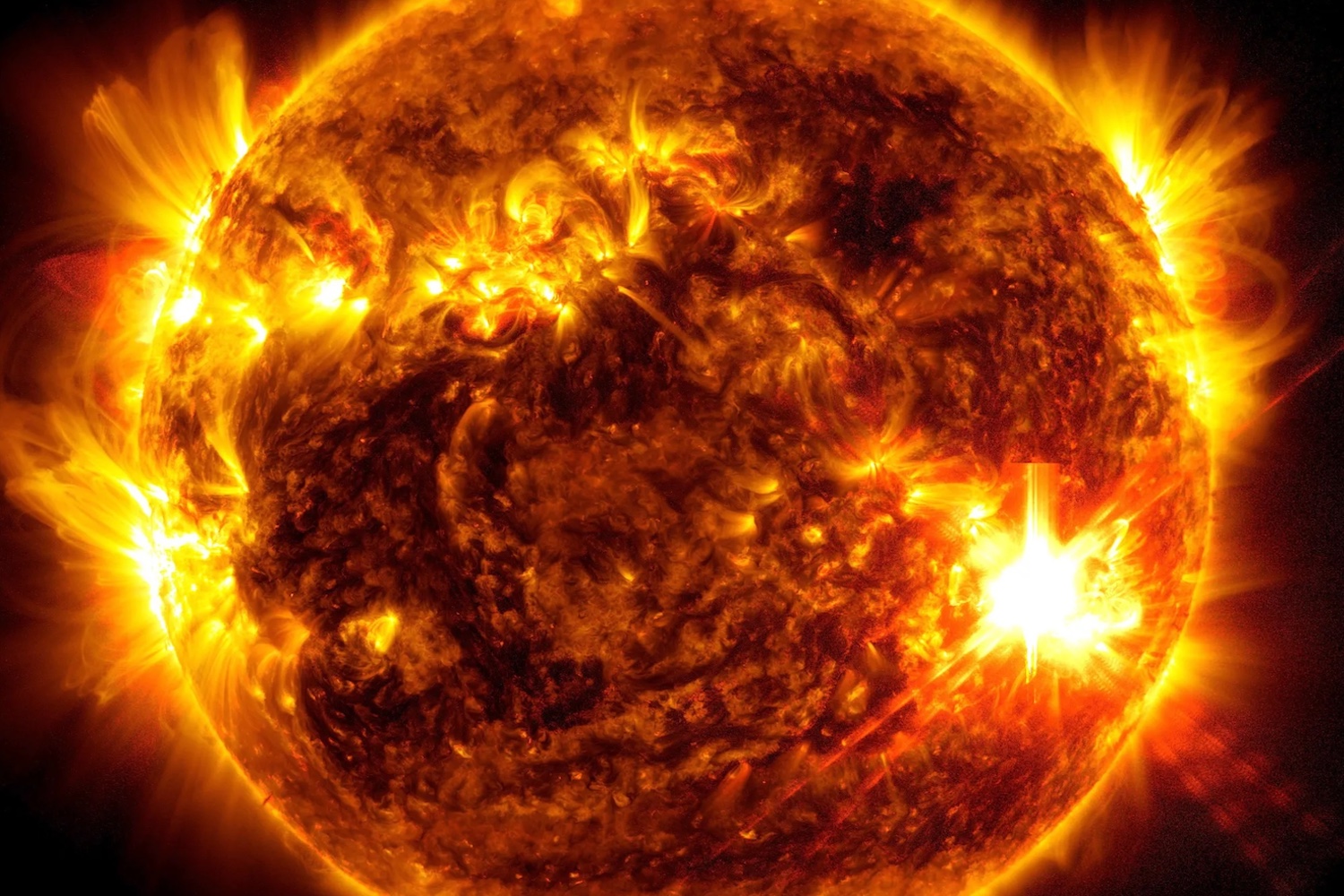
NASA’s Solar Dynamics Observatory (SDO) captured this image of an X5.8 solar flare peaking at 9:23 p.m. EDT on 28 March 2025.NASA SDO
During that sentence , the quickness will be unable to process new data garner beyond November 26 . gratefully , the data point collected prior to the implosion therapy has not been lost , and will remain store until the harm to the servers has been repaired .
“ scientific discipline data processing for HMI , AIA , and IRIS will be down for an extended length of time , as will access to the file away data at JSOC , ” the deftness wrote in a statement . The instruments continue to function ordinarily , and are being supervise by the Instrument Operations Center at the Lockheed Martin Solar & Astrophysics Lab .
NASA ’s solar observatory helps scientists get a better understanding of the Sun ’s influence on Earth and near - Earth space by monitoring how the star changes over time . It ’s not ideal for scientist to not be able to receive data from SDO for the next while , especially since the Sun is in its most active phase . Earlier in October , NASA confirm that theSun is in solar maximum , a period of increase solar activity that often affects Earth .

NASA has been using SDO to supervise the Sun and go after incoming solar storms . In May , Earth was hit by the largest geomagnetic violent storm in two decadesafter the Sun flung a hatful of charged particles towards our planet . SDO fascinate trope of muscular solar flares catch fire from the Sun ahead of the storm , which were the first warning signs of what was to come .
As the Sun continues its quicksilver behavior , observation of our boniface star are temporarily on pause until the solar observatory ’s footing - based servers convalesce from flood damage .
NASAsolar dynamics observatorysolar stormsthe Sun

Daily Newsletter
Get the good tech , science , and civilization news in your inbox day by day .
newsworthiness from the time to come , delivered to your present tense .
Please take your want newssheet and subject your email to upgrade your inbox .

You May Also Like


